By the SajiloBhasa instructors · · 6 min read
Free Japanese lessons online: how far they take you, and where they stop
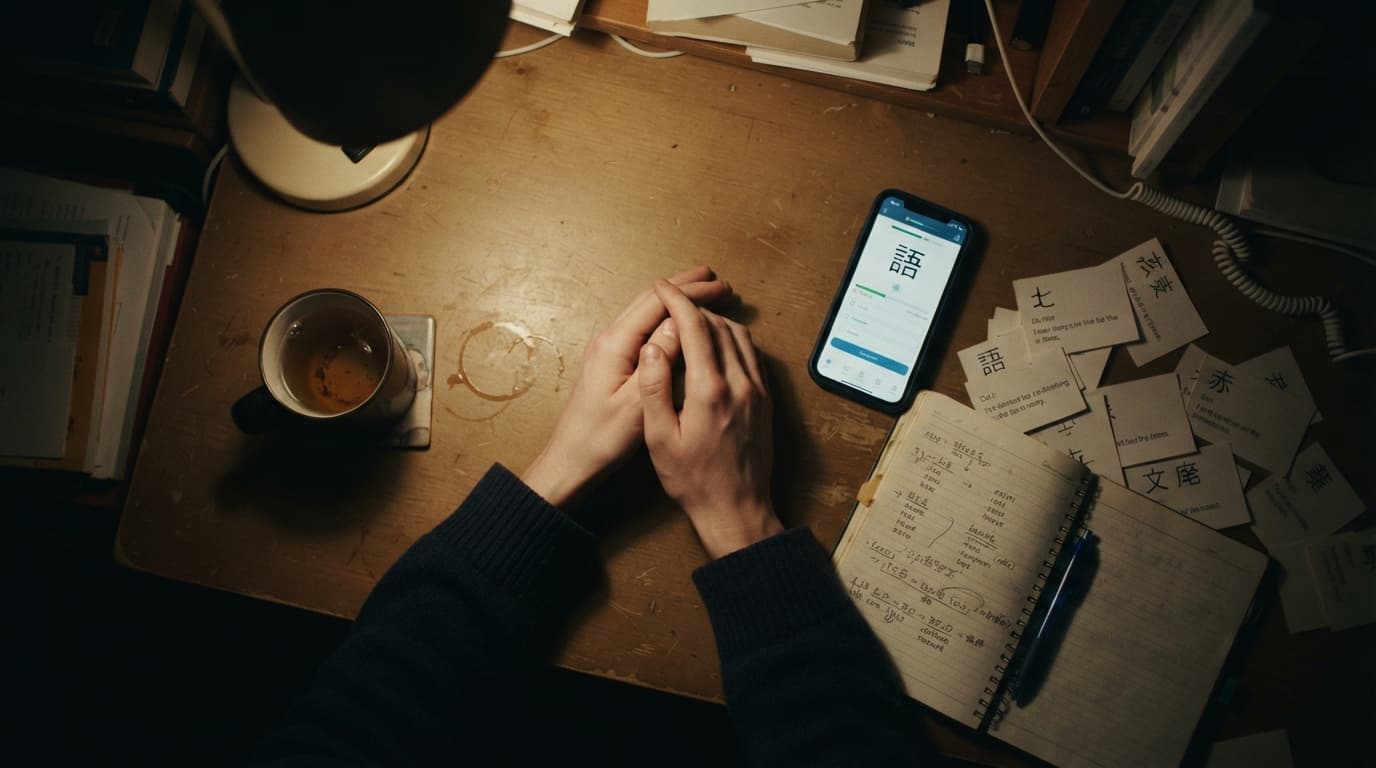
Start with the honest part: you can learn a real amount of Japanese for nothing. Free lessons on YouTube, free kana charts, free vocabulary decks and a free app on your phone will genuinely carry you through hiragana, katakana, a few hundred words and the first handful of grammar patterns. Anyone who tells you otherwise is trying to sell you something you do not need yet.
The useful question is not whether free Japanese lessons work. It is where they stop, and what it costs you to find out the slow way.
What free material is genuinely good at
Memorisation. The two alphabets are pure drilling, and a free app drills as well as any paid one. Vocabulary is the same. If your goal this month is to read every hiragana character without pausing, you do not need a teacher and you should not pay for one.
Exposure is the other one. Free Japanese listening material is effectively unlimited, and the habit of hearing the language daily is worth building from week one, free, forever.
The wall, and why almost everyone hits it in the same place
It arrives somewhere around the middle of N5 and it always looks the same. You understand every grammar point when it is explained. You cannot produce a single sentence without stopping to assemble it. You recognise words on a page and do not catch them in speech. And there is nobody to tell you which of the four things you are doing wrong is the one holding you back.
That is not a motivation problem, though it is usually diagnosed as one. It is a feedback problem. Free material can explain, test and repeat. It cannot watch you, hear the mistake you do not know you are making, and correct it that same minute. Speaking is a skill you can only build by speaking to somebody who answers back.
What the free route actually costs
A free course has no fee and it does have a price, which is time, and time in this case is exam sittings. The JLPT is held twice a year. Somebody who drifts through free material for eight months and then admits they are stuck has not saved a course fee, they have spent two sittings, and if their plan involves a visa or a job application with a deadline on it, those sittings were the plan.
The people who lose most are rarely lazy. They are the ones who studied honestly on their own for most of a year, made real progress, and still could not hold a five-minute conversation, because nothing in the free route ever required them to.
The split that works
Use free resources for everything that is memorisation and exposure, and pay only for the thing that cannot be free: a live instructor and a small group who make you use the language out loud every week. Drill kana on your phone on the bus. Save the class hour for the part where somebody corrects you.
Put crudely: pay for feedback, never for information. Information about Japanese is abundant and free. Somebody listening to your Japanese and telling you what is wrong with it is neither.
A free thing worth taking now
Our trial class is free and it is a real class, not a sales call: you join a live lesson, you get asked to speak, and you find out in one hour what eight months of self-study would eventually have told you about where your Japanese actually is. If you have been studying free for a while and suspect you have stalled, that hour is the cheapest diagnosis available.
Come with your kana already learned. That part really is free, and it is the part you can do before the next cohort starts.
Questions people ask
- Can I learn Japanese online for free?
- You can learn a real amount of Japanese for free, particularly hiragana, katakana, vocabulary and basic grammar, using free apps, videos and charts. What free material cannot give you is somebody who hears your Japanese and corrects it, which is the part that turns knowledge into speech.
- Is a free Japanese course enough to pass the JLPT?
- Free material can get a disciplined self-studier to JLPT N5, because N5 is mostly recognition of kana, vocabulary and simple grammar. It becomes unreliable at N4 and above, where the grammar has several ways to say a thing and the choice between them matters. Most people who try stall somewhere in the middle of N5.
- Should I pay for a Japanese course or study for free?
- Do both, and split them by what each is good at. Use free resources for memorisation and listening practice, which cost nothing to deliver. Pay only for live teaching and correction, which cannot be free because it requires an instructor in the room with you.
- How do I know if free study has stopped working for me?
- Try to say out loud, in Japanese, what you did yesterday and what you plan to do tomorrow. If you understand grammar when it is explained but nothing comes out when you try to speak, you have a feedback problem rather than a knowledge problem, and more free material will not fix it.
Read next
- Learn Japanese in Nepal without moving to Kathmandu or leaving your jobAlmost every language institute in Nepal teaches in a room, and almost every room is in Kathmandu. That decides who gets to learn. A live online class removes the constraint without removing the teacher.
- An online Japanese language course from Nepal: how it actually worksLive classes and recorded videos are sold under the same three words. Here is what a real online Japanese course looks like from the inside.