By the SajiloBhasa instructors · · 5 min read
Japanese learning games online: what they fix and what they hide
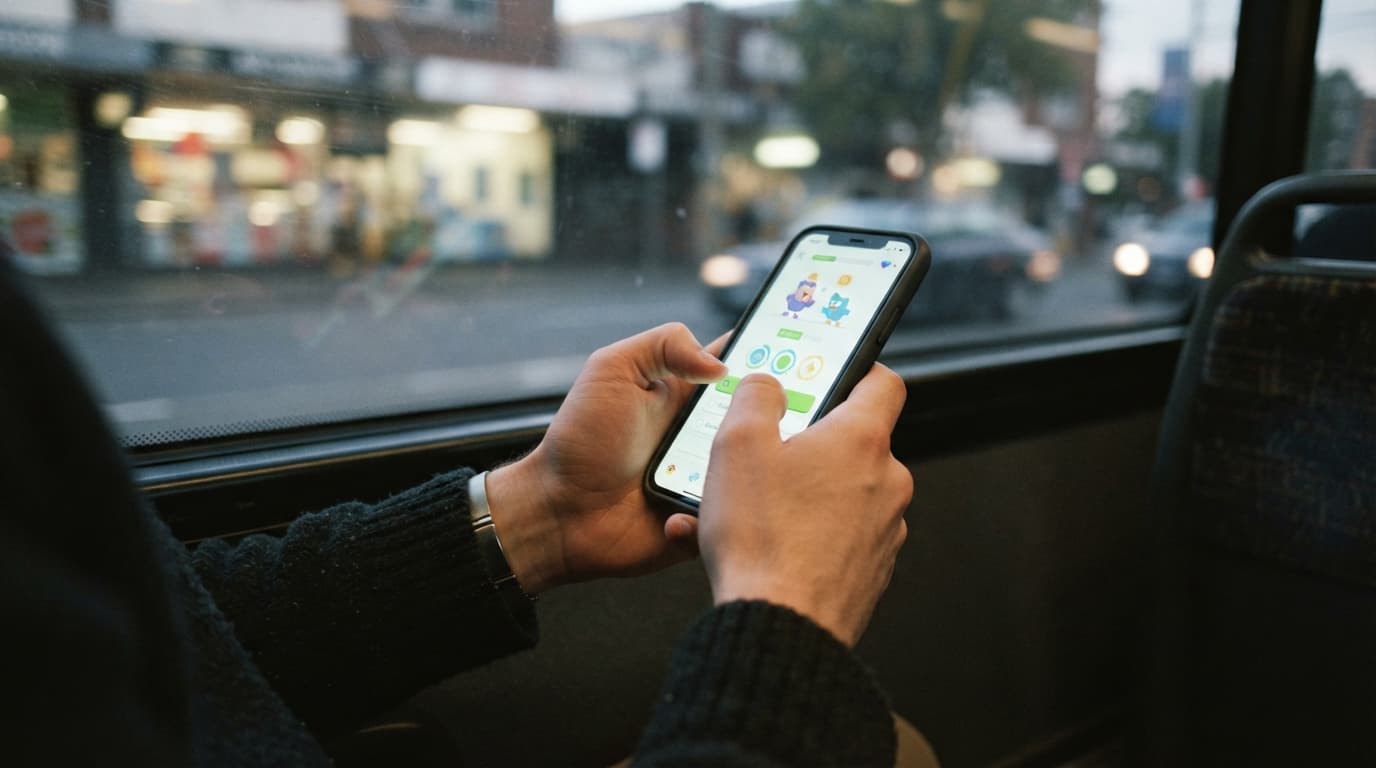
Japanese learning games online are better than they get credit for, and worse than their streak counters imply. Both things are true, and knowing which is which is the difference between a game that speeds you up and one that keeps you busy for a year.
What games are genuinely excellent at
Repetition without boredom. Japanese has a large amount of raw memorisation in it, kana first and then vocabulary and kanji readings, and this is the least enjoyable studying there is. A game that turns it into points and streaks gets you to do the repetitions you would otherwise skip. That is a real contribution and it is worth using.
They are also good at frequency. Five minutes on a phone happens on days when thirty minutes at a desk does not, and for pure recall, frequent and short beats rare and long.
The illusion the streak creates
Here is the problem. A game rewards recognition: you are shown something and you pick the right answer from a small set of options. Actual Japanese requires production: nothing is on screen, nobody offers you four choices, and you have to build the sentence yourself while a person waits.
These feel similar and are not. Plenty of learners arrive with a three hundred day streak and cannot introduce themselves out loud. They are not exaggerating their study and they were not wasting their time, they simply practised a different skill from the one they needed, every day, very diligently.
The second gap is grammar at depth. Games teach patterns by exposure, which works for simple sentences and breaks down around the point where Japanese starts having several ways to say a thing and the choice between them matters. That is roughly where N4 begins, and it is where app-only learners usually stall.
How to use them properly
Demote them. A game is your vocabulary and kana drill, done on the bus, in the queue, in the ten minutes before bed. It is not your course. When it tries to teach you grammar, let it, and do not expect that to be the lesson that makes you able to use it.
Then put the thing they cannot do somewhere in your week where it will actually happen: an hour, live, with an instructor and a small group, where you are asked questions and have to answer them in Japanese with no multiple choice on offer. Games plus a weekly class is a genuinely strong combination, and it costs less effort than most people expect because the drilling is already happening in dead time.
A quick test you can run tonight
Put your phone down and say out loud, in Japanese, what you did yesterday and what you plan to do tomorrow. Thirty seconds. If it comes out slowly but it comes out, your routine is working. If nothing comes out at all despite months of daily practice, that is not a sign to study harder. It is a sign that the missing hour is the one with a teacher in it.
A free trial class is the fastest way to find out which of those you are. Keep the streak either way.
Questions people ask
- Can you learn Japanese from games and apps alone?
- You can learn a great deal of vocabulary, kana and kanji readings from games, because that part of Japanese is pure memorisation and games make repetition bearable. What they cannot build is production: assembling a sentence yourself, out loud, with nobody offering four choices.
- Why can I not speak Japanese despite a long app streak?
- Because a game rewards recognition and conversation requires production, and those are different skills that feel similar while practising. A long streak means you practised diligently, just not the thing you needed. It is not a sign of laziness or of being bad at languages.
- Are Japanese learning games good for beginners?
- They are very good for the first stage, where the work is memorising hiragana and katakana and building vocabulary. They become unreliable around N4, where Japanese starts offering several ways to say a thing and the choice between them carries meaning a game cannot explain.
- How should I use a Japanese app alongside a class?
- Demote the app to a drill. Use it for vocabulary and kana in dead time, on the bus or in a queue, and let the weekly class carry the grammar and the speaking. The combination works well because the memorisation is already happening in time you were not using anyway.
Read next
- Learn Japanese in Nepal without moving to Kathmandu or leaving your jobAlmost every language institute in Nepal teaches in a room, and almost every room is in Kathmandu. That decides who gets to learn. A live online class removes the constraint without removing the teacher.
- An online Japanese language course from Nepal: how it actually worksLive classes and recorded videos are sold under the same three words. Here is what a real online Japanese course looks like from the inside.